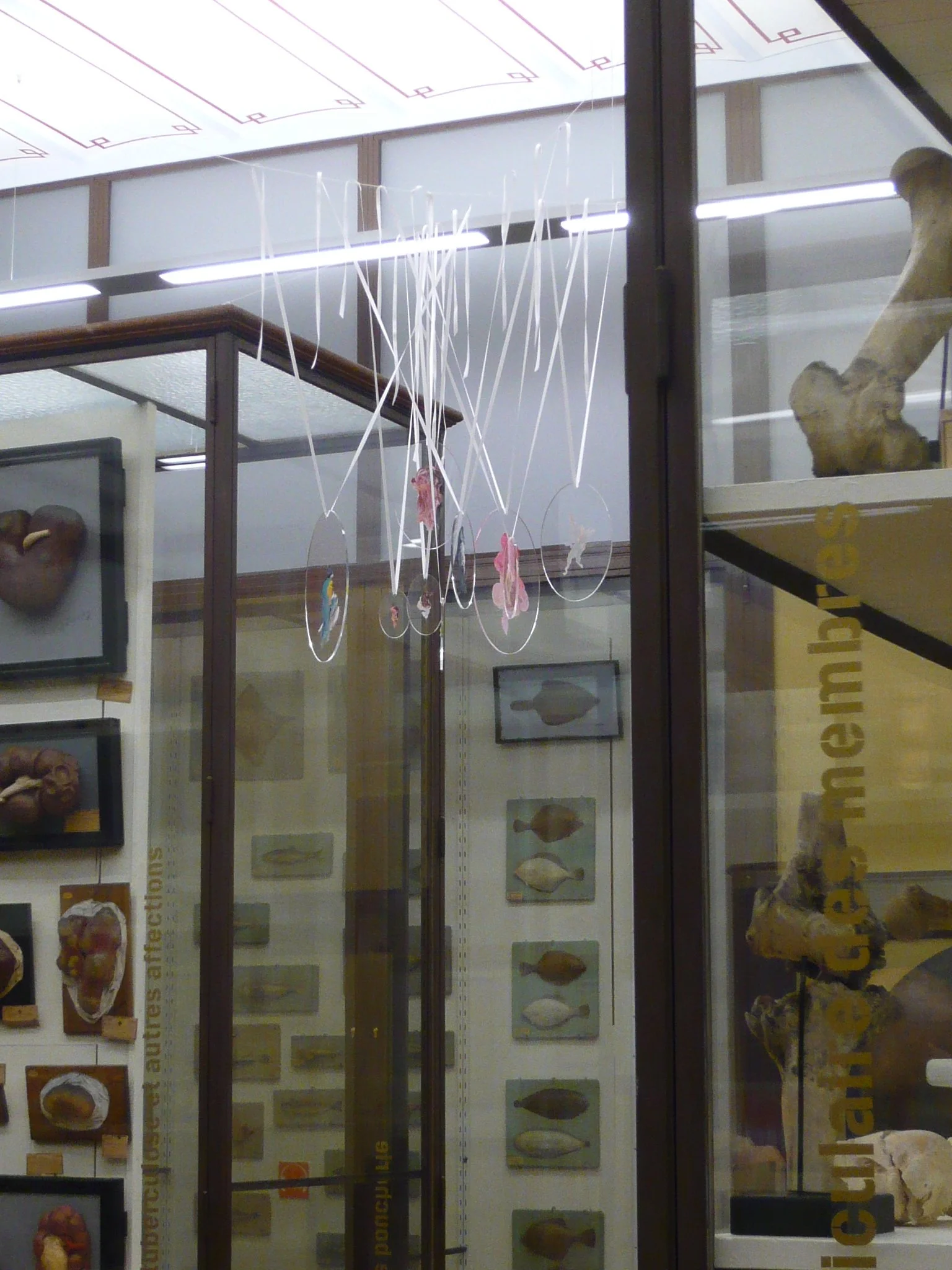
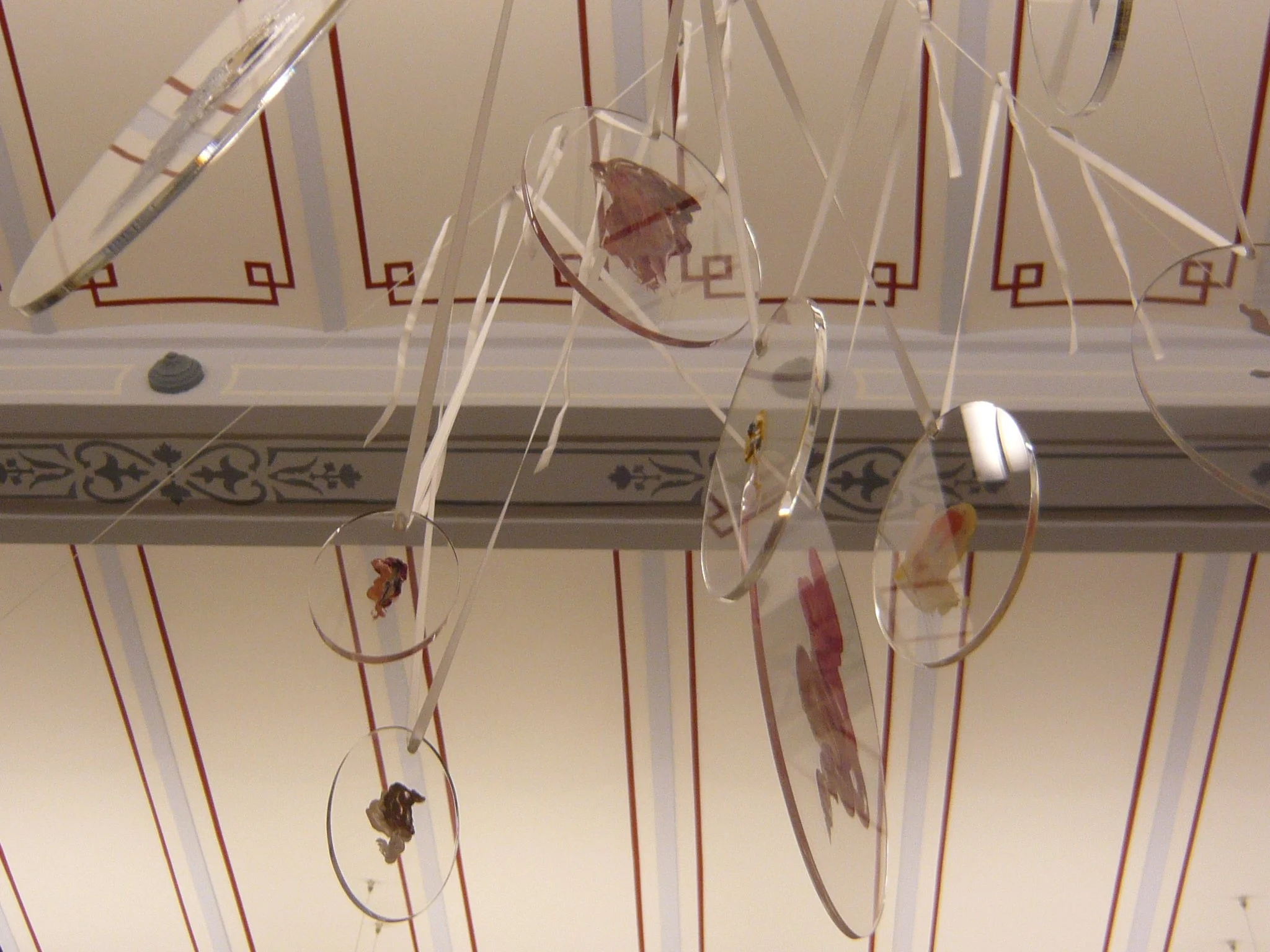
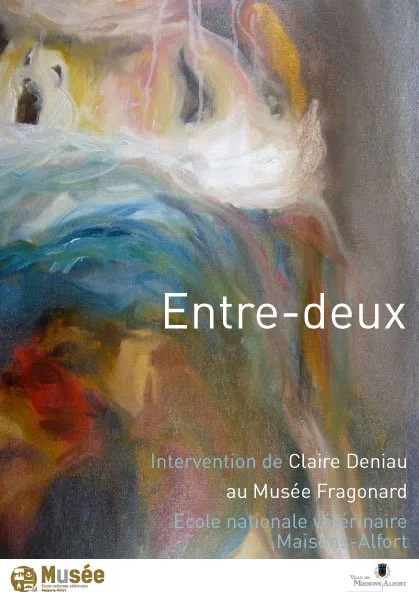
Entre-deux
Musée Fragonard
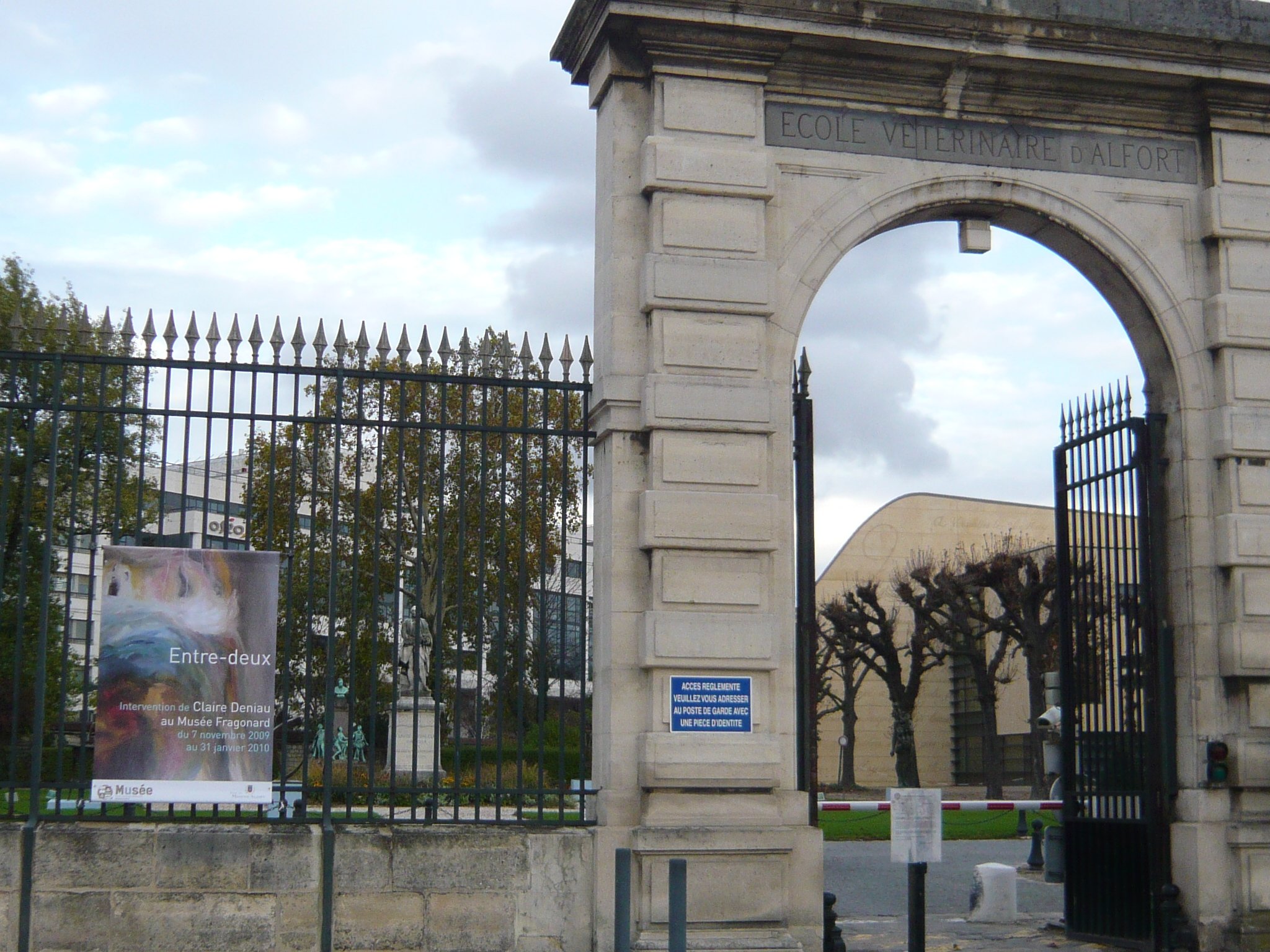
École Vétérinaire de Maisons-Alfort, France
7 November 2009 - 31 January 2010
Curated by Christophe Degueurce et Hélène Meisel
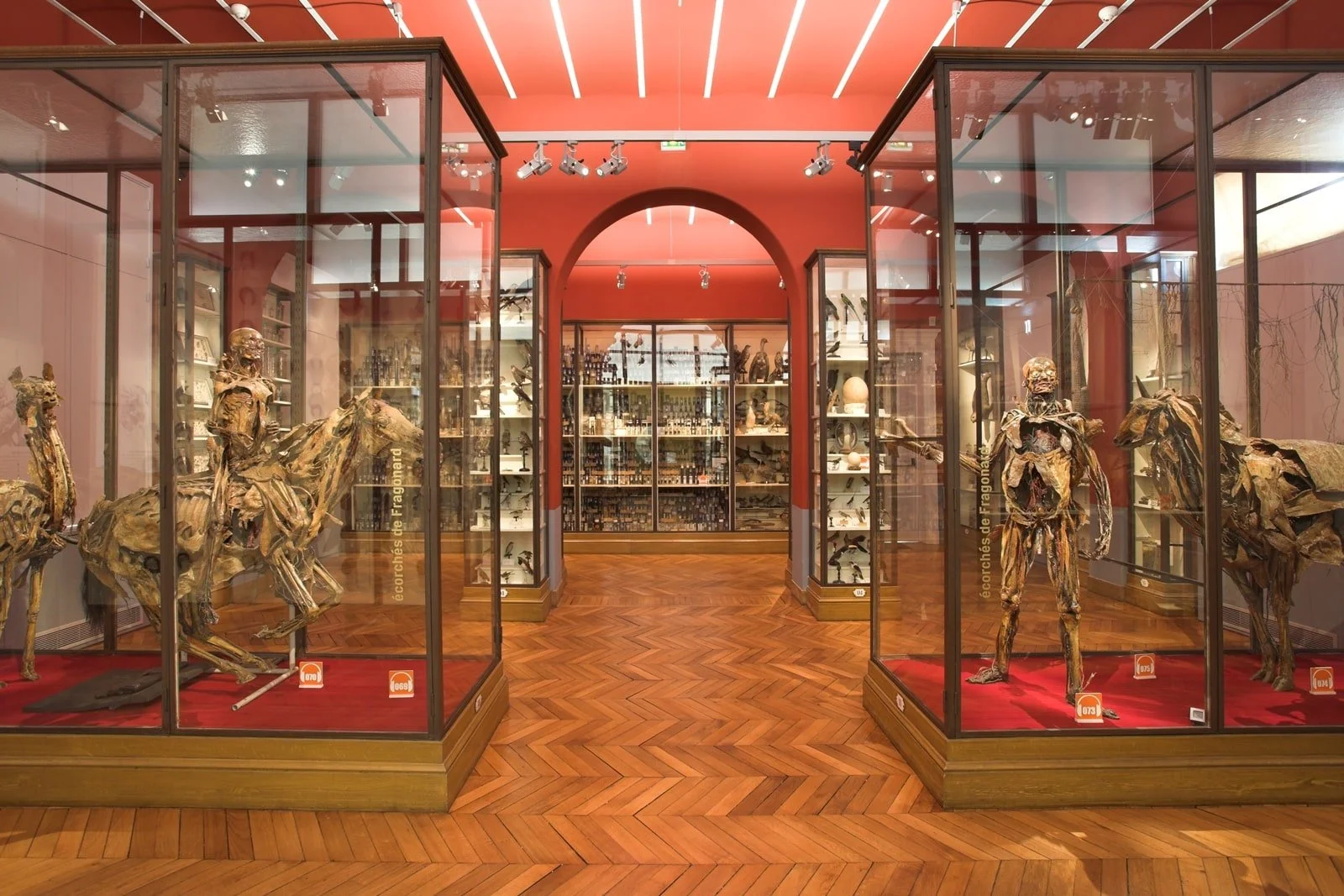
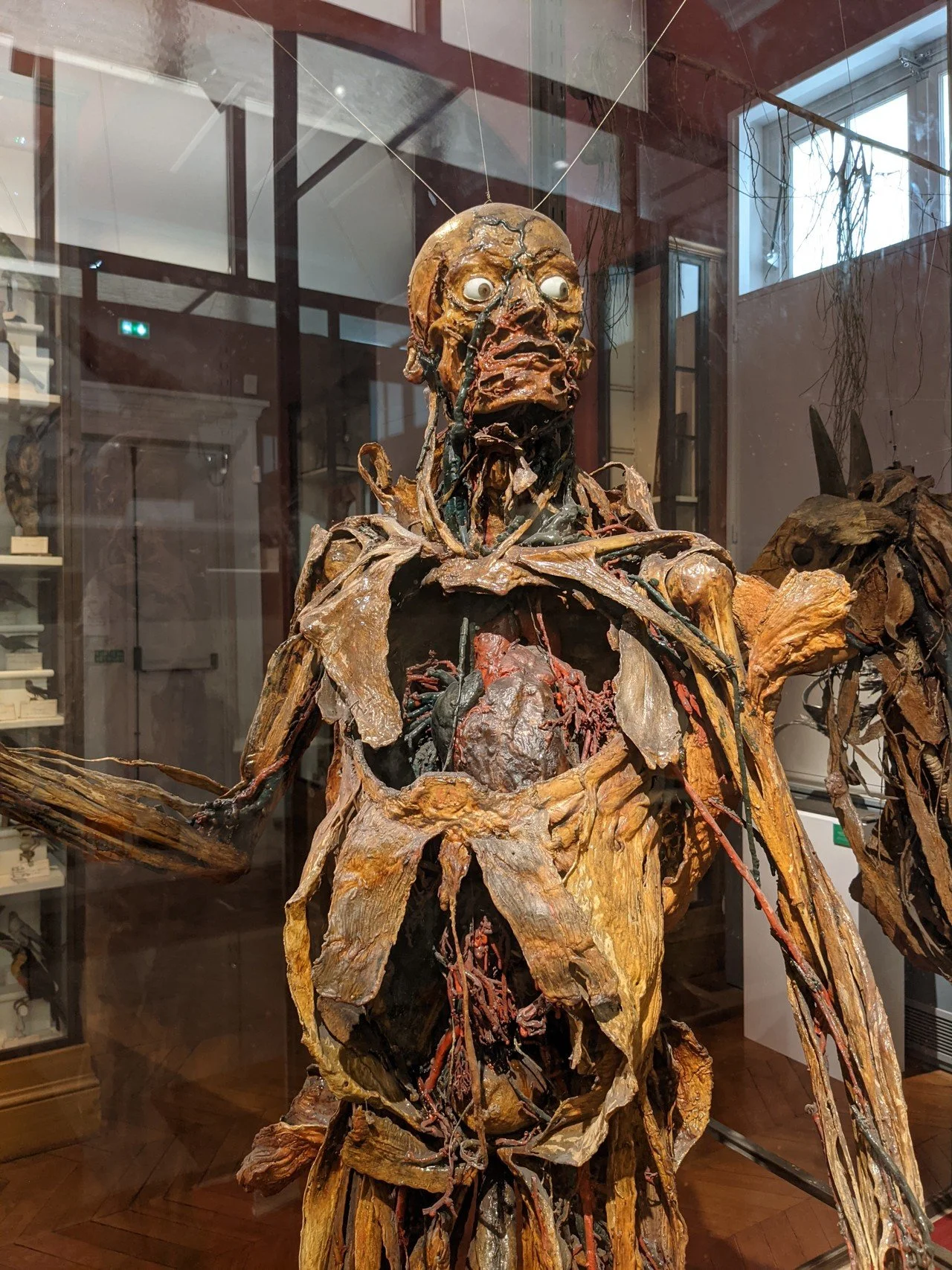
The Fragonard Museum and its “ écorchés “
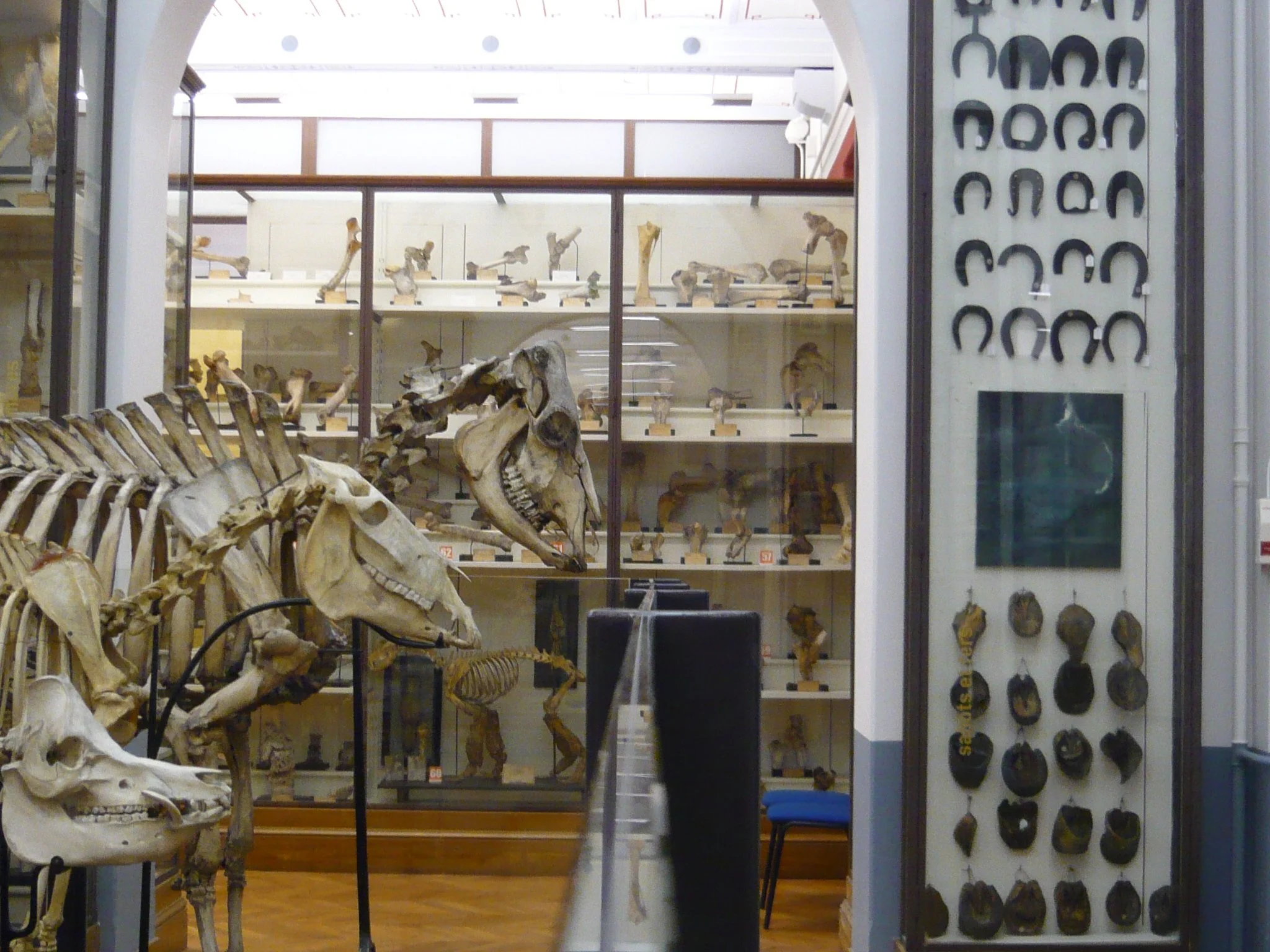
The Alfort Veterinary School was founded in 1766 by Louis XV. Honoré Fragonard was its first professor of anatomy and director. He created numerous preparations that constituted a veritable cabinet of curiosities, which has been preserved to varying degrees over the years. Most of the pieces currently on display date from the 19th and 20th centuries.
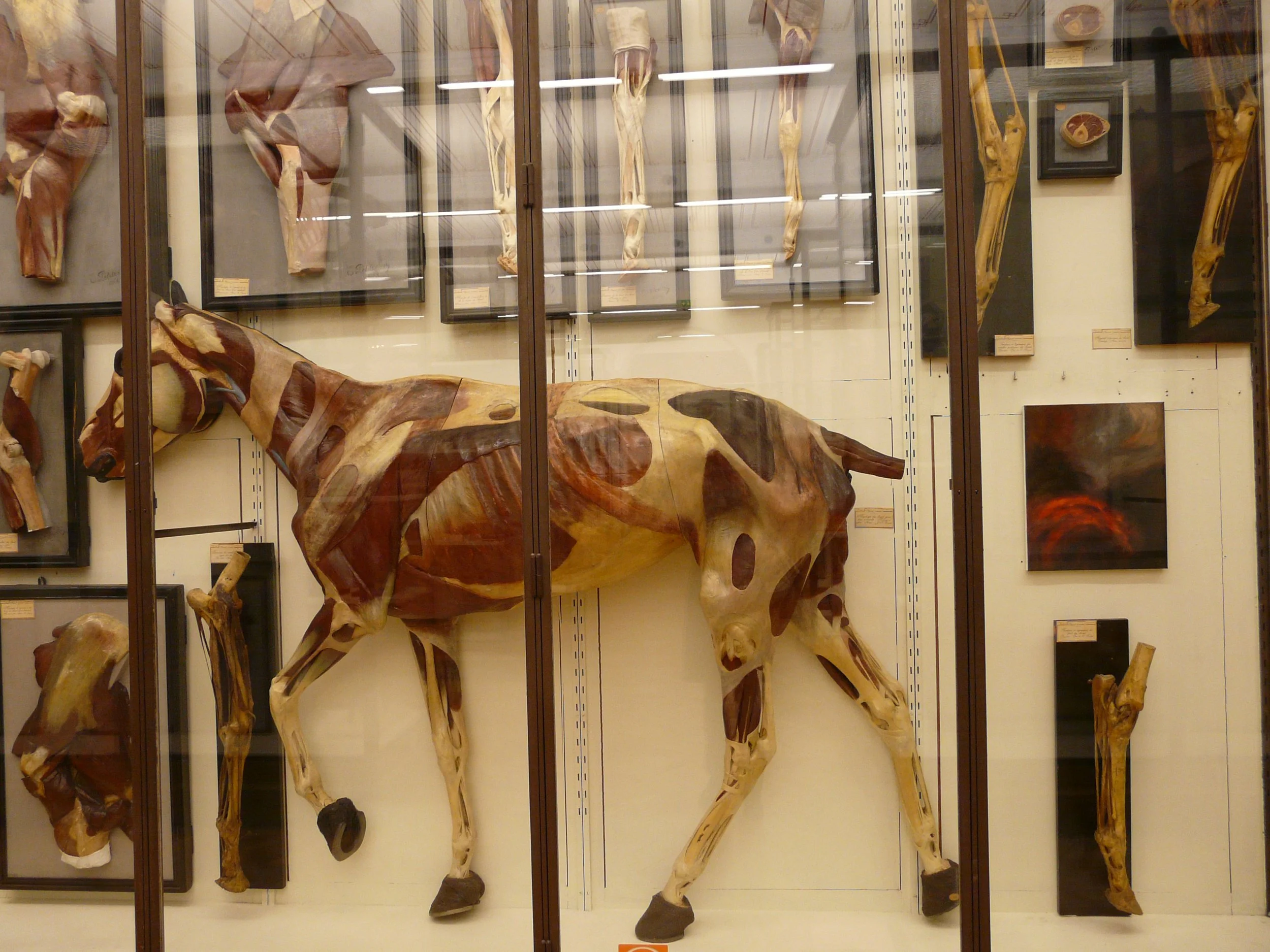
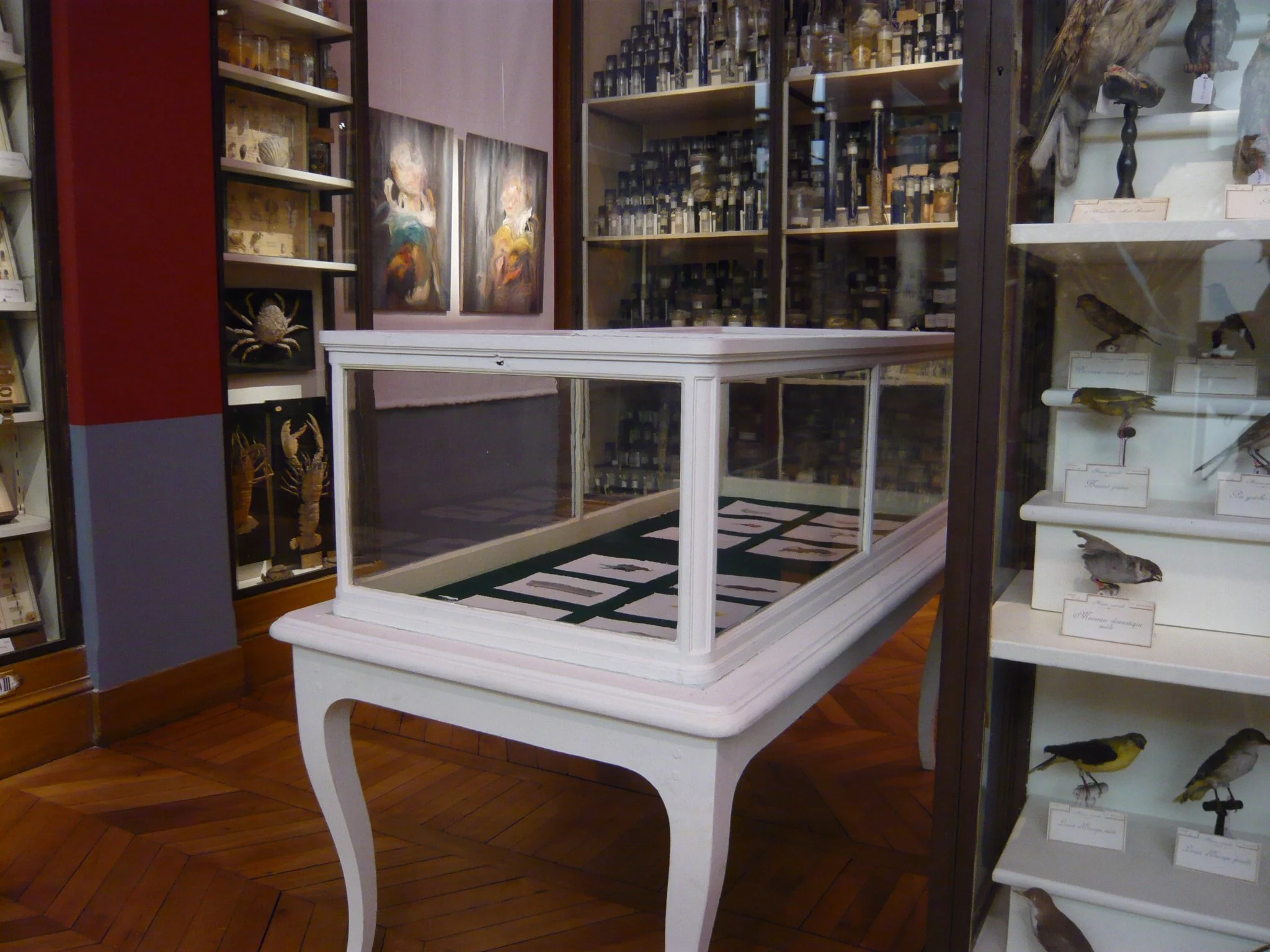
At the beginning of veterinary education, anatomy was one of the main subjects, along with botany and farriery. Horses were the species of choice for veterinarians in the 18th century. The study gradually expanded to other domestic species. This led to the emergence of comparative anatomy, a discipline that compares the organs of different species. Most of the exhibits at the Fragonard Museum have been arranged with this educational approach in mind. The museum is organised into three themed rooms. The first is devoted to normal anatomy and teratology, the discipline that studies malformations and monstrosities. The second room displays the skeletons of domestic and wild animals. Finally, the last room contains pathological exhibits, as well as zoology collections and Fragonard's famous écorchés.
Among these, The Horseman, The Man with the Jawbone and the group of human foetuses dancing a jig are exceptional examples of Honoré Fragonard's scientific and artistic genius. Their respective scenes, paradoxically surprising in their lifelike quality, challenge our ways of envisaging and representing the impermanence of the body.
Claire Deniau's painting: the mechanics of bodies
Claire Deniau's artistic practice is akin to the visual arts: painting, drawing and watercolour. Although these mediums are graphic, they offer the artist the means to accomplish a myth associated with sculpture: giving life. In her practice, formlessness appears as the basic foundation for the emergence of all forms: the unstable boundaries of matter and colour create a ‘zone of indecision’ where everything is constantly forming and deforming. The paint, applied in thick or vaporous strokes, reveals indistinct, deeply carnal forms, comparable to tissue or skin.
It is desire in its original form, far removed from the reflexes conditioned by consumerism, that drives Claire Deniau's practice. Without being figurative, her painting evokes the body, particularly through her palette and the inspirations that drive her: Claire Deniau's research is nourished by the works of Jean-Honoré Fragonard, whose painted subjects are embodied in substantial flesh, vibrant skin tones and billowing fabrics. The sensuality of the textures and themes in Fragonard's portraits echoes the libertine aspects of the 18th century, the enlightened counterpart of which was explored by his cousin, the anatomist Honoré Fragonard. Inspired by the écorchés created by Honoré Fragonard in the 1770s and preserved at the Fragonard Museum, Claire Deniau rethinks her mechanics of desire: confronting the emaciated reality of the body, its death and the life that once animated it. Between painting, sculpture and science, the exhibition Entre-deux creates a meeting place between life and death, desire and repulsion.
Hélène Meisel
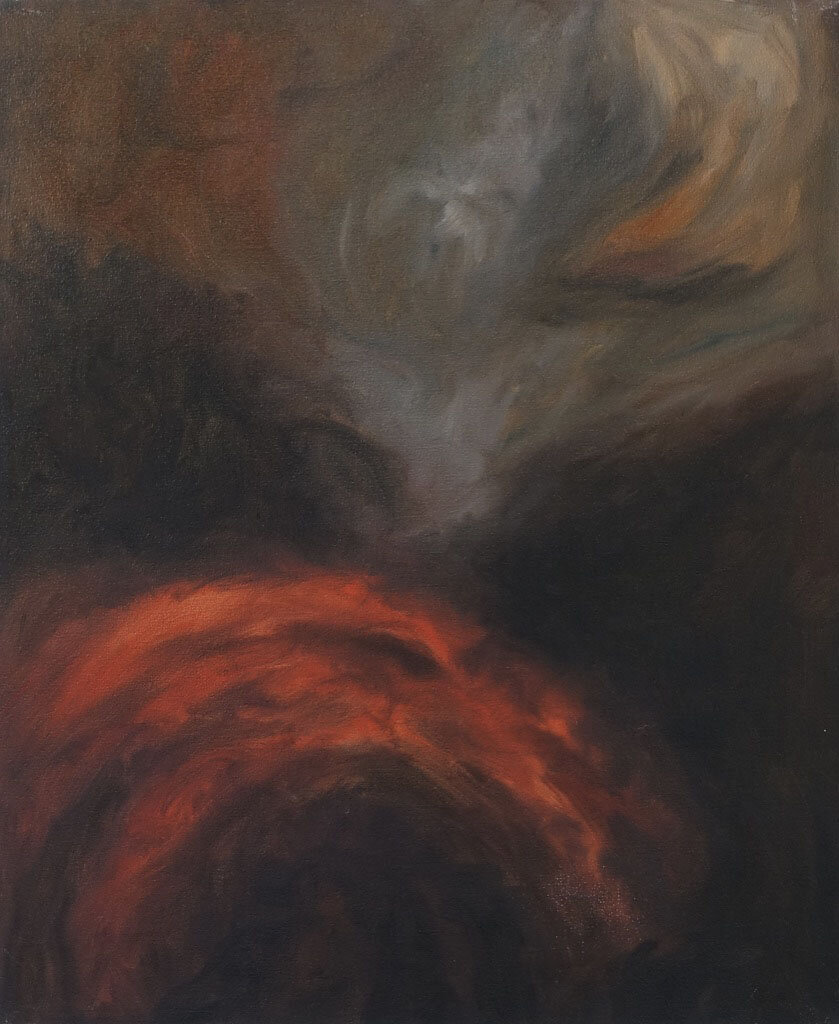
Avec indécision
Oil on linen
46 x 38 cm
2009
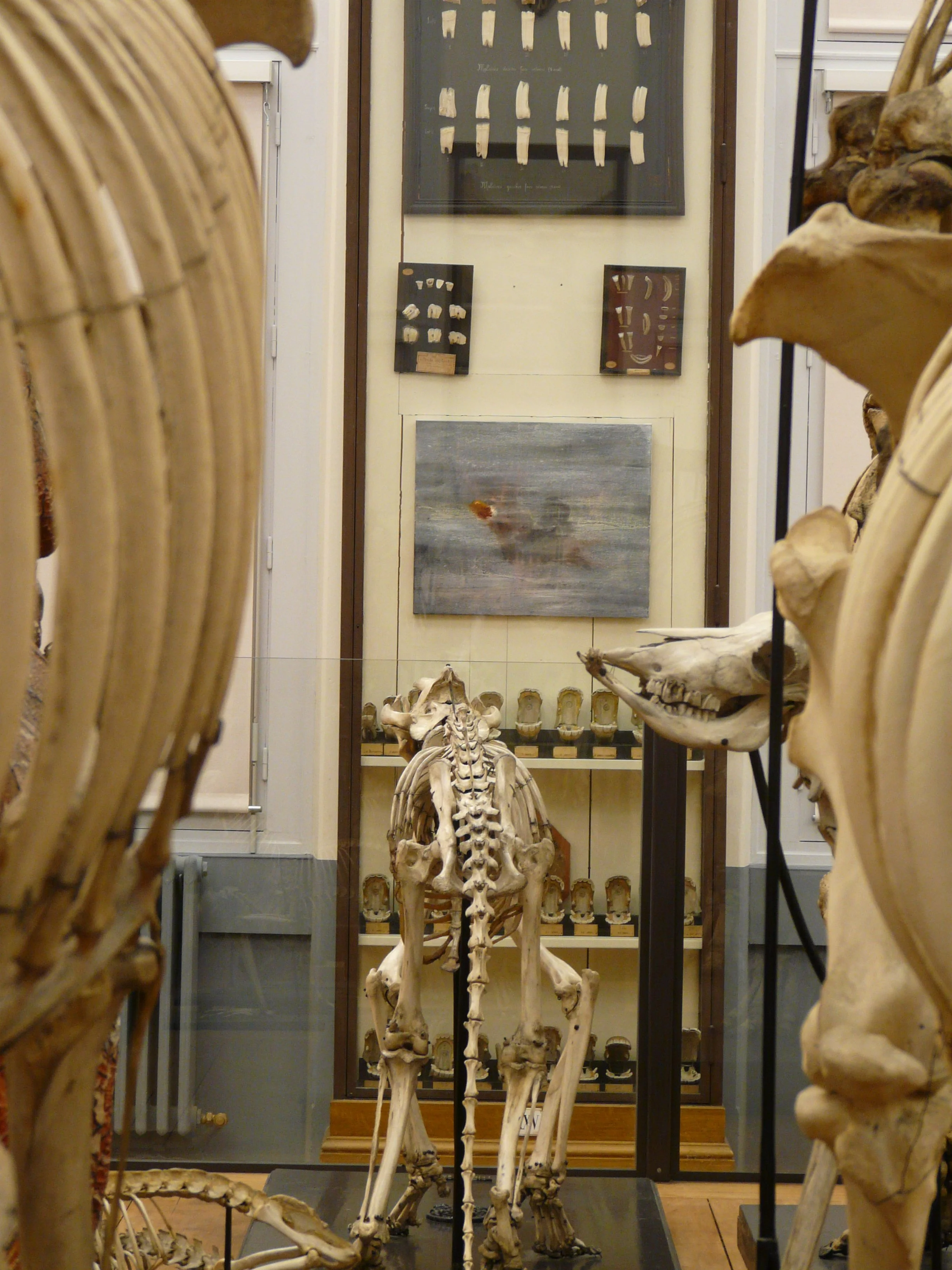

Avec indécision
Oil and acrylic on linen
50 x 61 cm
2009
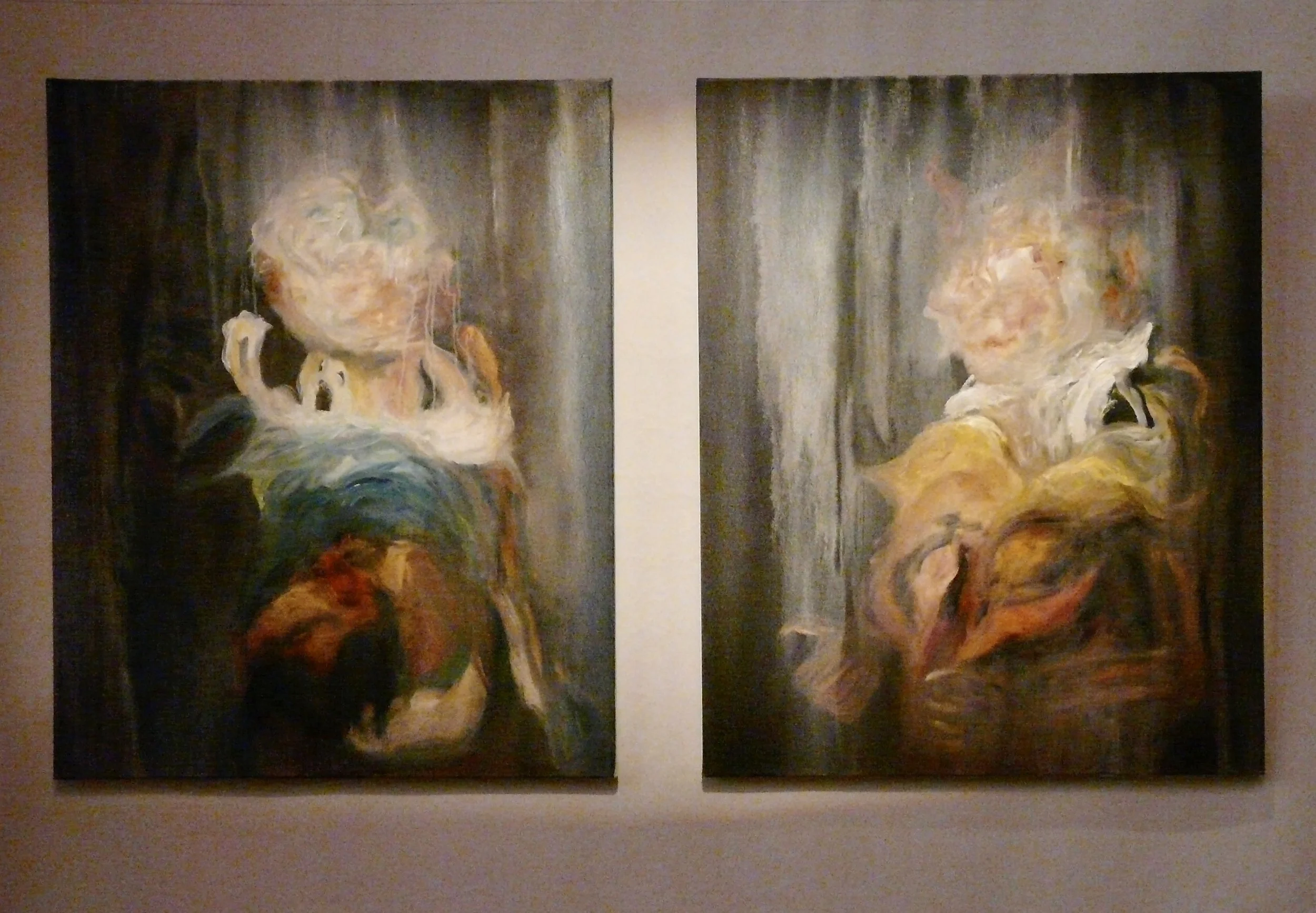
Figures de fantaisie 1 & 2
Oil on linen
81 x 65 cm
2009
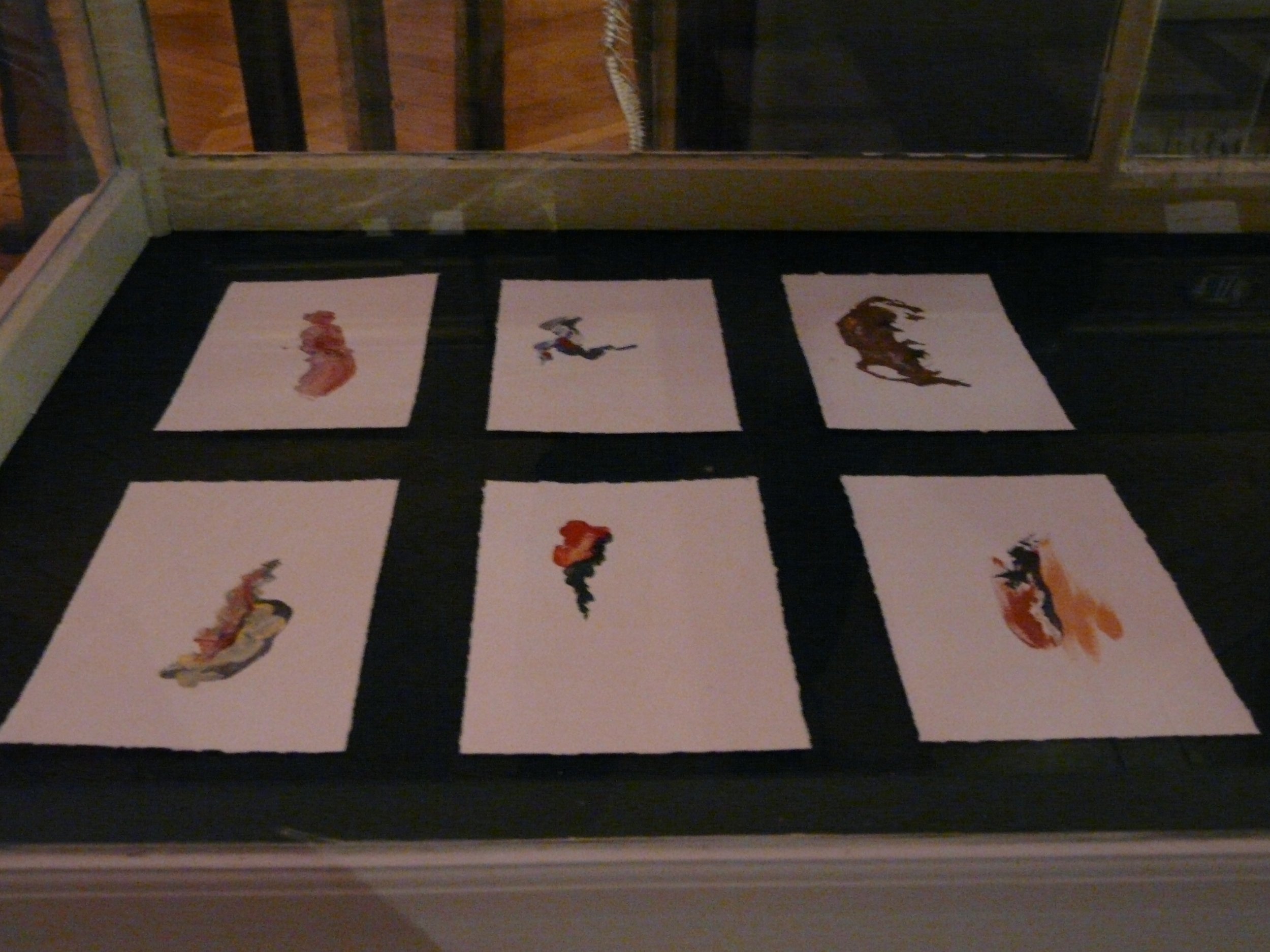

Avec indécision
Oil on linen
55 x 46 cm
2009